


Contact Improvisation Workshops 2026
For full Programme Timetable, click on the blue button link above
We are excited to bring you an expanded lineup of CI workshops and a diverse team of passionate teachers from across the UK and abroad, offering their unique perspectives and collective knowledge to deepen your practice.
Each day begins with a somatic practice that fuses dance and meditation to set you up for the day ahead.
Throughout the day, you can choose from four captivating CI workshops. This year we have two CI workshop spaces, allowing us to offer you all an opportunity to dance no matter your experience level.
As the day draws to a close, we have live music jams supported by skilled improvisation musicians to inspire the collective energy of the dance, beginning with a guided gentle warm-up that sets the stage for individual and group exploration. Alternatively, you can enjoy our focused jam tent, where you can find specific themes daily.
Come, be part of our thriving community camp, and unlock new dimensions of your dance practice.
2026 CI Teaching Team
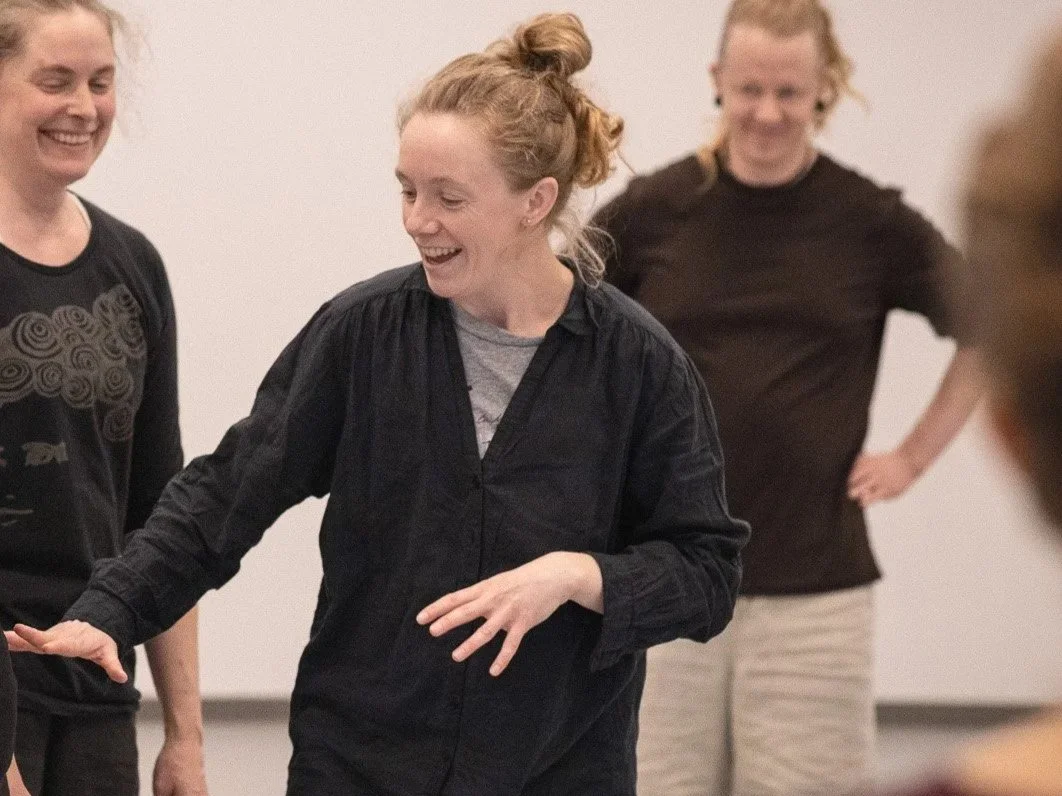
ELISE MAE NUDING
-
I first encountered CI in 2010 in the USA at the American Dance Festival and Bates Dance Festival where I studied with Nancy Stark-Smith and Ishmael Houston-Jones. CI modules were also part of my formal dance training at London Contemporary Dance School (M.A. 2014). I have been teaching and facilitating CI regularly since 2016, both in Sweden and abroad. In Sweden, I regularly teach open classes and workshops in Stockholm, I have taught CI in all the major dance educations in Sweden including Balettakademien, Stockholm University of the Arts, Gothenburg University, and New Education for Contemporary Dance, Härnösand. I have also taught CI classes/workshops for professional dancers and initiated a new 60-hour CI course at Härnösands Folkhögskola (community college) that is about to run for the third time. I have also been an organiser of the “Sunday Jam” in Stockholm since 2019. My recent CI teaching experience abroad includes workshops at Echo Echo studios (Derry, Northern Ireland), Contact Festival Freiburg 2024, India Contact Festival 2025 (guest/support teacher). Most recently I was invited to teach a series of workshops in Tallinn, Estonia during summer/autumn 2025.
-
My teaching philosophy in Contact Improvisation is grounded in curiosity, safety, and shared responsibility. I approach teaching and facilitation as a process of creating conditions rather than dictating outcomes, encouraging participants to trust sensation, listen actively, and allow movement to emerge from relational awareness. Inclusivity is central: I offer proposals in ways that honour diverse bodies, different ways of learning, and which allow multiple ways of participating. I emphasise consent, adaptability, and choice. My work is influenced by somatic practices, postmodern dance lineages, and an open-ended approach to embodied knowledge and co-creation.
Workshops
-
This workshop introduces the centre as a functional anatomical and sensory anchor, both for organising one’s own body in space and in relation to others. Through explorations of the connection between centre and peripheries (limbs, head, and spine), we will develop pathways for grounding into the earth while creating space to rise, extend, and reach outward. We will start with solo and small-group explorations to build sensory awareness and physical readiness, focusing on breath, the centre, and pathways into and out of the floor. Partner exercises will gradually introduce point of contact and basic weight-sharing and counterbalance structures. Throughout the session, we will emphasise consent-based partnering, clear communication, and multiple options for participation.
Beginners
-
In this workshop we will dive into our backspace and explore how we can deepen our sensitivity to the back surfaces of the body and the space behind us when we dance. How do we relate to what we do not see? How can we expand our possibilities in our dance by moving into and through our backspace?
We will work with both the energetic and relational possibilities of the backspace as well as exploring some specific options for using the backspace to share weight.
Improvers
-
This workshop explores how Contact Improvisation functions as a compositional practice in real time. We will work with spatial framing, timing, and the ability to shift attention between internal sensation, partner dialogue, and the wider performance environment. Through structured improvisations, dancers will practice making choices that clarify intention, transform material, and shape the arc of a duet or group score. We’ll explore tools such as cueing, contrast, repetition, interruption, and stillness to heighten performative presence and ensemble awareness. Designed for experienced CI practitioners ready to refine their improvisational craft and expand their performance range.
Improvers
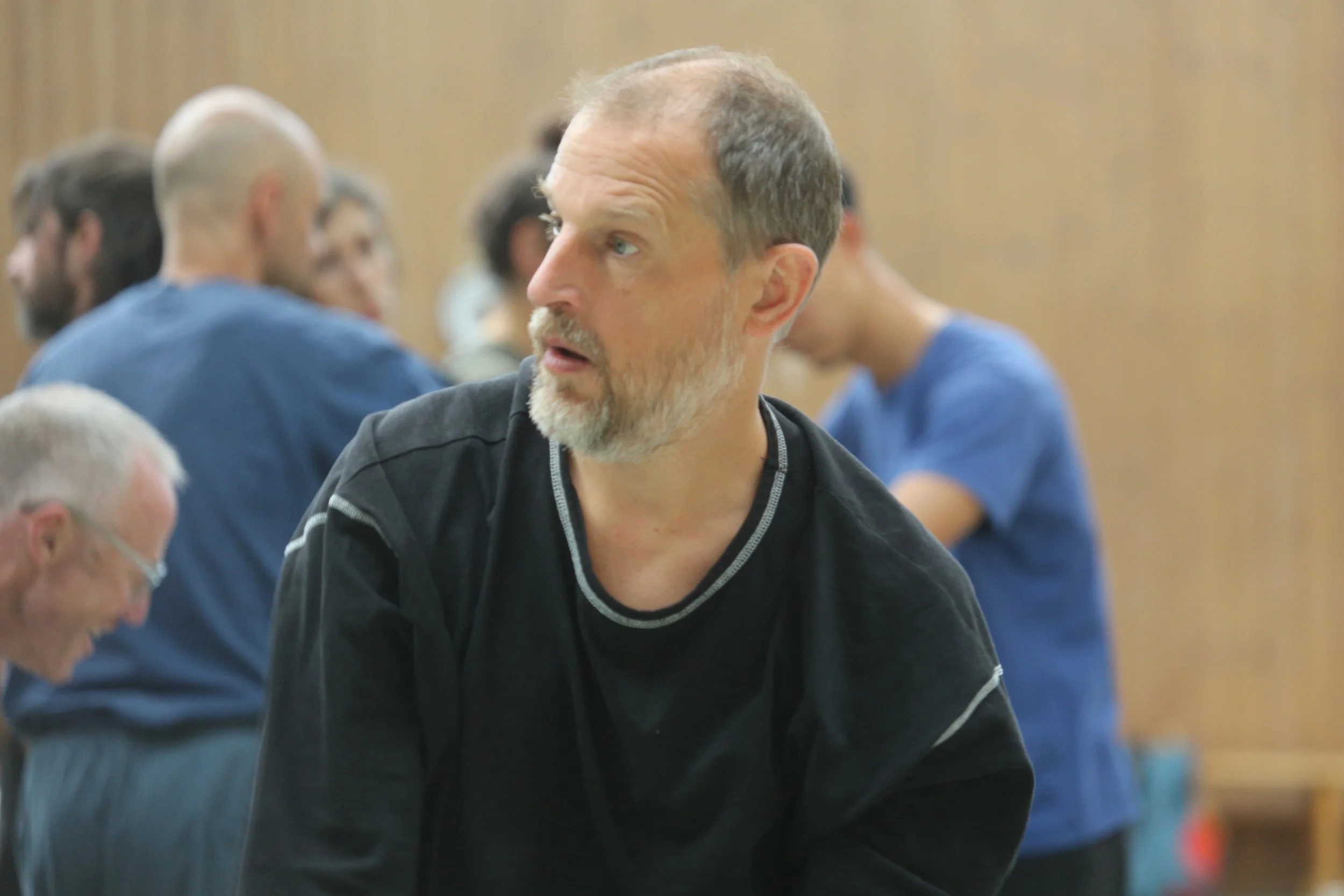
MARK RIETEMA
-
Mark Rietema (DE/UK)
Mark teaches Somatics and CI in London and abroad, and offers workshops,
lectures and group facilitation around embodiment, dance and mental health in Universities,
the NHS and grassroots groups. He works as a psychotherapist and somatic educator,
having studied Process Oriented Psychology and Body-Mind Centering®. His previous
background is in community art projects and performances (UK, US) with an MA in
Community Arts (Goldsmiths). He teaches as faculty for Embody Move UK and the Institut
Prozessarbeit Deutschland, and as an associate in Kings College. Mark is part of the
organising team for the London Contact Festival and Goldsmiths jams & classes.www.markrietema.com
-
Mindfulness in Action - I see Contact Improvisation as way to being fully present in the moment with another person. Giving each other permission to improvise and see what wants to arise when we listen to our senses and allow the unknown to take us. I'm curious about the playfulness and creativity that can arise from a sense of safety and alignment.
Workshops
-
A slower class that will allow us plenty of time to connect to our breath, with a focus on lungs and their relationship to the diaphragm and heart. We will explore how this sense of inner volume and ebbing and flowing inside of us, will influence our connection to others, and the dance that wants to arise from that. An opportunity to make breath visible through our shared Improvisation. Expects elements of Body-Mind Centering®, and slow somatisations that focus us mindfully inwards as well as into relation.
Beginners
-
Connective tissue is the living matrix that supports, contains, and connects us from the inside out. Using this intricate web as the foundation for our dancing, we’ll explore how the fascial network can deepen our sense of structure, relationship, and movement, both within ourselves and in connection with others. We’ll play with ideas such as fascial hooking, swimming under the skin, and tensegrity as ways to stay present with the unknown, finding both safety and suspense as we enter dynamic lifts and shared momentum. Expect guided explorations into skin, connective tissue, and touch, and plenty of space to move, experiment, and dance.
Improvers
-
A slightly advanced workshop, we'll work with finding three dimensionality through our spine and periphery, opening up our back space to playfully work with creating new pathways as over dancers. Expect movement scores that challenge our pre-conceived pathways and that set parameters for dynamic play. Some prior knowledge of CI is recommended as we'll be playing with lower and higher lifts.
Experienced

JOCASTA CROFTS
-
Jocasta is an experienced Contact Improvisation teacher, a Body Mind Centering practitioner, a Creative, a tecaher and a healer/bodyworker. She has just completed her BA in Fine Art at Bath Spa University.
Jocasta teaches a weekly class in Stroud but has been part of the bristol CI community for over 25 years! She is intuitive, playful, loves bringing us into our animal body. She is also a meditator, a temple preistess, a mama, a tribal gatherer and is a little bit witchy.
-
Listening to all the impulses and choosing, rather than reacting.
Every dance can teach us something and take us to new places. The body is fluid and a bag of water. We are animals as well as conscious human beings. Allow both parts to dance simultaneously.
Workshops
-
Breaking into dynamic play with more than one person. Exploring different roles of flying, being a base and supporting the base. Exploring tensegrity between the three of you. Playing in solos, duos and trios to expand the possibilities in jamming.
Beginners
-
Working with and from the feet and legs, from the extremities to the centre, we will connect and activate to our centre. A three dimension, active, playful class which explores the lost limbs of the legs and their relationship to the core. Opens up very new ways to dance CI.
Improvers
-
Each part of our spine offers differenet possibilities in the type of movement and dance we can explore. Playing with each section of the spine and then bringing it together, this will be our investigation. Using BMC (experiential anatomy) to know more about our boney spine and the nerves that run through it will inform the material we play with in the dance.
Experienced
-
Synovial fluid warm up for the joints and muscles
-
(Bring someone with you to dance with) with the chosen focus/score of meeting through energy, skin, fat muscle bone - for the whole hour.
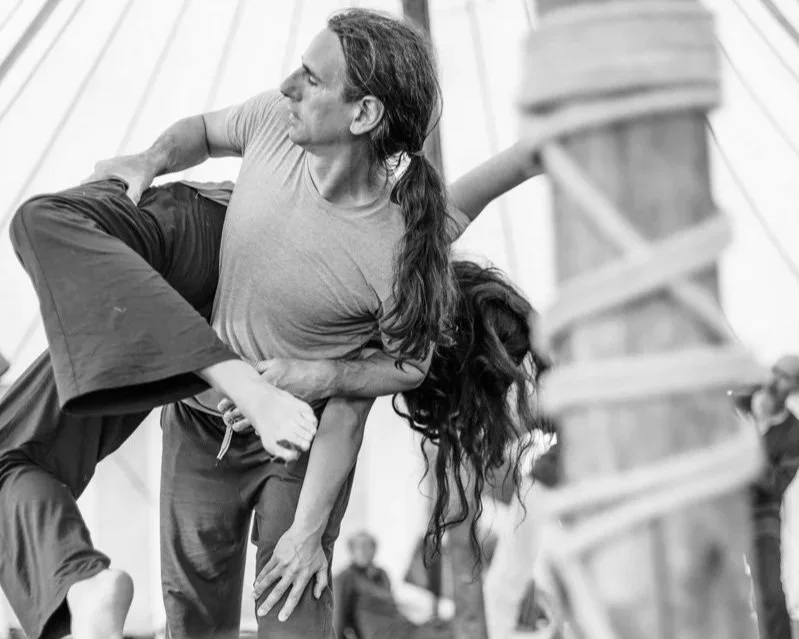
RICHARD PARKER
-
Richard has been developing his skills and knowledge as a Contact Improvisation (CI) dancer since 2006. Over the years he has extensively trained with many amazing international teachers within CI including Karen Nelson, Lisa Nelson, KJ Holmes, Nita Little, Andrew Harwood, Ray Chung, Martin Keogh, Scott Wells, Benno Voorham & Joerg Hassmann.
Since 2011 he has shared his teaching of CI within Professional, Educational, Festival & Community Organisations as well as organised his own CI Festivals, Retreats and Camps.
“A true love for the form and genuine investigation is at the heart of Richard's teaching. He plans and delivers material in a thoughtful, reflective and thorough way, each exercise leading on to the next fluidly. His gentle, clear and encouraging manner gives students the confidence to push their practice further and his commitment to staying true to the form ensures that others can continue to discover and enjoy the beauty of the dance.”
-
I am passionate about the relational and deeply human experience that can be revealed through Contact Improvisation. My workshops are a refined balance of skills, creativity & free exploration, taking participants on a journey into the co-creative wonders of this practice, which always includes a healthy dose of safety and care for one another.
Through a grounded and easy-going approach, I love sharing both my detailed and extensive understanding of the principle movement forms within Contact Improvisation alongside the subtle nuances, helping people to truly embody the fundamental aspects of the dance. Most importantly creating a sense of relational awareness and a sense of togetherness as we co-create within the dance space.
Workshops
-
In this workshop, we slow things down to focus on one of the more challenging and tender aspects of Contact Improvisation: waiting within shared weight. Rather than moving quickly into momentum or action, we’ll explore the subtle dance of what happens when we pause — physically and emotionally — in moments of contact.
It is not uncommon for Contact dancers to have fear around giving weight. This can create unconscious resistance, bracing, holding back, or collapsing, all of which can lead to a feeling of “heaviness” in the dance. By learning to wait before fully offering weight, we give ourselves and our partners time to prepare, receive, and adapt. This not only makes the physical exchange safer and more effective, but also allows us to meet the emotional weight of the moment with compassion and presence.Waiting in this context becomes a radical act of trust: trusting our own body to release, trusting another to meet us, and trusting the connection itself to reveal what’s needed. It’s in this space that fear begins to melt, and the dance becomes lighter, more mutual, and more playful, even when working with substantial weight.
Improvers.
-
Dancing Through the Layers is an experienced-level Contact Improvisation workshop exploring the subtle communication that emerges through the body’s different layers in contact. Through elements of bodywork, touch research, and pathway exploration, we’ll investigate how intention, directionality, and movement proposals can be transmitted and perceived through the fascial network and deeper listening of the body. From these subtle exchanges, we’ll open pathways into supported flying and shared movement choices, exploring how we can follow, resist, redirect, or amplify what arises within the dance.
Experienced
-
Lifting, Flying & Jumping
This workshop invites you into the exhilarating territory where trust, technique, and timing meet. We’ll explore some of the more advanced possibilities within Contact Improvisation, where the edge becomes a place of play, surprise, and shared flight.
We’ll work with principles that support dynamic movement and weight sharing, including:
Flying from table top and standing pelvis, landing through the hands
Jumping with lightness, lifting through centre and extending through space
Launching from the feet into spirals of flight
Shoulder lifts and shoulder flights, from floor to standing to jumping and back again
This is a space to refine your technique, increase confidence in taking and giving weight, and expand your range in shared momentum. We'll centre mutual care and communication, even as we play at the edges of what feels possible.
This workshop is for those with a very solid centre-led Contact Improvisation foundation, who are ready to explore dynamic risk, weight, and lift with intention and responsiveness.
Experienced
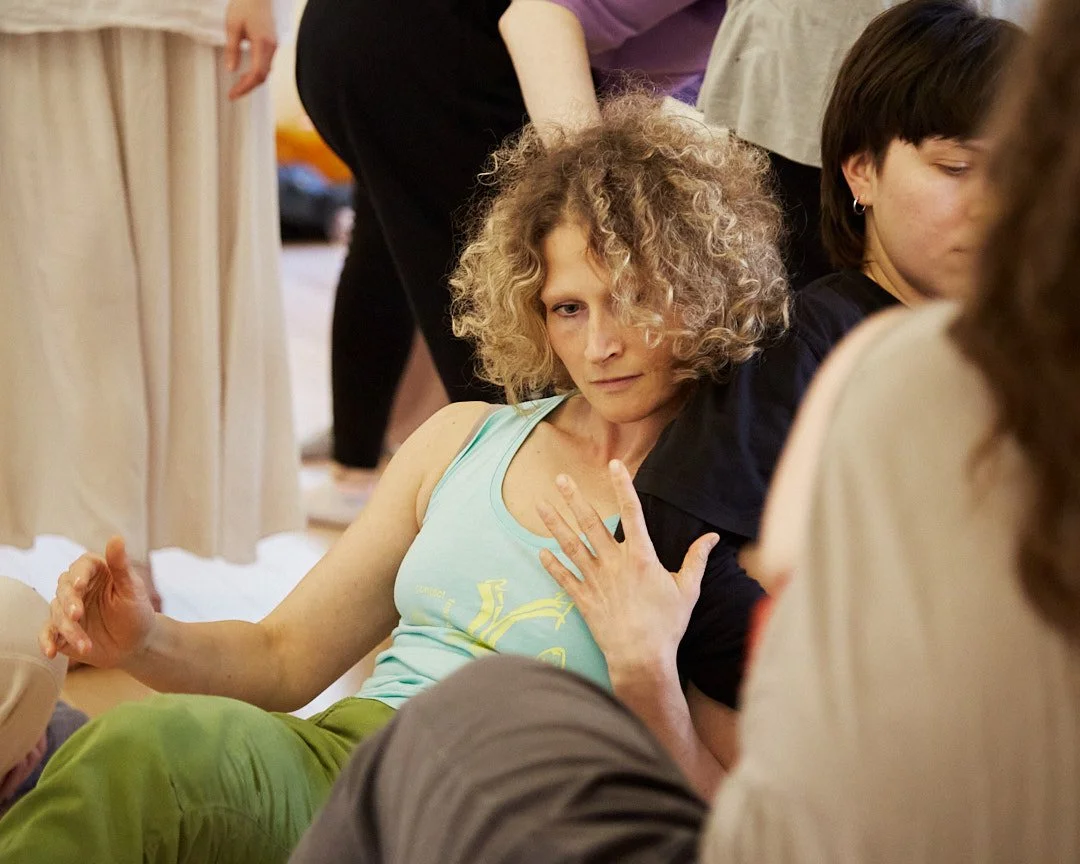
MARIE CHABERT
-
I encountered Contact Improvisation 23 years ago in France with Patricia Kuypers. I then moved to the UK where I trained as dancer at The London Contemporary Dance School (BA Hons) and had classes with Rick Nodine and Jovair Longo. I've been inspired by CI practitioners such as Nita Little, Karen Nelson, Charly Morissey, Daniela Schwtarz and Eckard Muller amongst others. I've been teaching dance for 18 years and CI for the past 8 years. I'm also a dancer, choreographer and massage therapist, so all these practices influence my teaching.
Here are a few selected CI Teaching roles:
Currently, Rambert School, CI classes for BA student, London
2025-Now, Curator & facilitator: Monday CI Jam + classes, London
2023-Now, Curator & facilitator: Women’s Touch, workshops for
women and non-binary practitioners, London, Freiburg
2023–25, Weekly CI classes, Chisenhale Dance, London
2021–23, The Place, Improv and CI classes for adults
London Contemporary Dance School, CI classes
2019–23, Organising and facilitating CI events in Germany:
workshops, jams, mini-festival
2018–22, Co-founder of TripCI: CI collective, Tripspace, London
-
I see CI as a relational practice: how do I relate to myself, to others, to gravity, to my environment? I try to bring a sense of autonomy, agency and empowerment in my teaching. I like to be playful and not take things to seriously, so everyone is comfortable. I like to invite people to cultivate care and compassion and create a safe and playful environment. As a facilitator, I also see myself as a choreographer: proposing scores and frameworks that deal with space, time, inter-personal dynamics, inviting people to play their part and co-create the space. I'm also a Buddhist and I think this philosophy is really in line with CI values of inter-dependency, self-responsibility, care, compassion...
Workshops
-
This Contact Improvisation workshop focuses on the pathways that lead into lifts, with particular attention to the pelvis, ribs and gaze as the initiators of weight, trajectory, and suspension.
We begin by exploring the 3 dimensionality of our body in space by bringing the pelvis in and out of the floor, following horizontal trajectories, while inviting suspension of the ribs and mobility of the head. From here, we study how subtle shifts in pelvic direction create pathways into suspension and buoyancy.
Working in pairs, we dive into the dialogue of suspending and redirecting. One partner explores offering their weight into suspension, while the other practices receiving, redirecting, and giving clear impulses. We start with hand contact to give impulses, then expand into whole-body listening, using surfaces such as the back, shoulders, and torso to accompany and re-direct momentum.
From there we will explore various ways to lift and share weight, using momentum and pathways in space to facilitate these lifts.
We then move onto trio constellations, accumulating the possibilities of impulses and responses, but also the opportunities to transition into lifting and flying. This opens space for risk-taking and dynamic lifts.
Experienced
-
I will lead a bodywork session to mobilise the limbs, free the joints and get into the tissue to massage, using our body weight.
We will then use the weight of our body to massage and give an experience of weight to our body.
Breath and shifting position will be encourage to lead into a gentle movement exploration with a partner Morning Practice
-
The first half of the workshop is a series of scores to prepare our body and voice to dance and speak. We will use physicality to bring out the voice, first experimenting with sound, then with a set sentence, and for those more daring with improvised text.
We will also have a score where observing the dancing becomes an impetus to produce words and improvised text, offering a space for dialogue between improvised dance and improvised text.
The second part of the workshop is dedicated to jamming and experimenting. The set up of the space will give a spatial structure to facilitate this moment of co-creation: the space will be frame by 4 sides of blank paper where people can either draw or write onto (there will be various prompts). We will also have a microphone to speak into.
Participants are welcome to either dance, bring their own poetry, improvise or read other people's poetry.

ERENDIRA CANEDO
-
I'm Eréndira and I've been dancing CI since 2009. I started teaching in 2022, curious to bring this practice to create community through movement and joy. I'm fascinated by the many levels of approach to CI, be it from a pure physical and technical practice, to a deep somatic experience. I'm in a constant movement research in different countries and international environments, fascinated by meetings through CI dance and the power of community happening thanks to it. I love teaching beginner level, offering the technique and listening skills that are needed to dance with curiosity and confidence.
Teaching regular CI classes in Kent since Autumn 2022. I have been running movement workshops since 2013 and teaching in festivals recently from 2024.
-
I find it important to teach people to feel safe within their body first, by understanding their movement capacities, abilities and possibilities. To inspire curiosity and a desire to explore their unique dance and from there meet another dancer. Shape, size, age, neurodivergence are discovered as a gift of our expression and movement on the dancefloor and thus the world.
Workshops
-
"Tension masks sensation" - famously said Steve Paxton. As a more experienced dancer, you have now better understanding of what CI is, you can do or invite some flights, offer and give weight, but sometimes the mind comes in and wonders if you're doing it right. Or you find yourself in the same places and patterns. We then need to invite our liquid form in. It all starts with our head, finding the right position for it, its connection to our upper extremities, our spine and the incredible influence of them in CI. We'll explore the release of the head in the dance, lifts and falls, the support of our arms, unlearn tense patterns and become more liquid, thus becoming lighter during flights and better connected to ourselves, the space, our partner and gravity.
Improvers
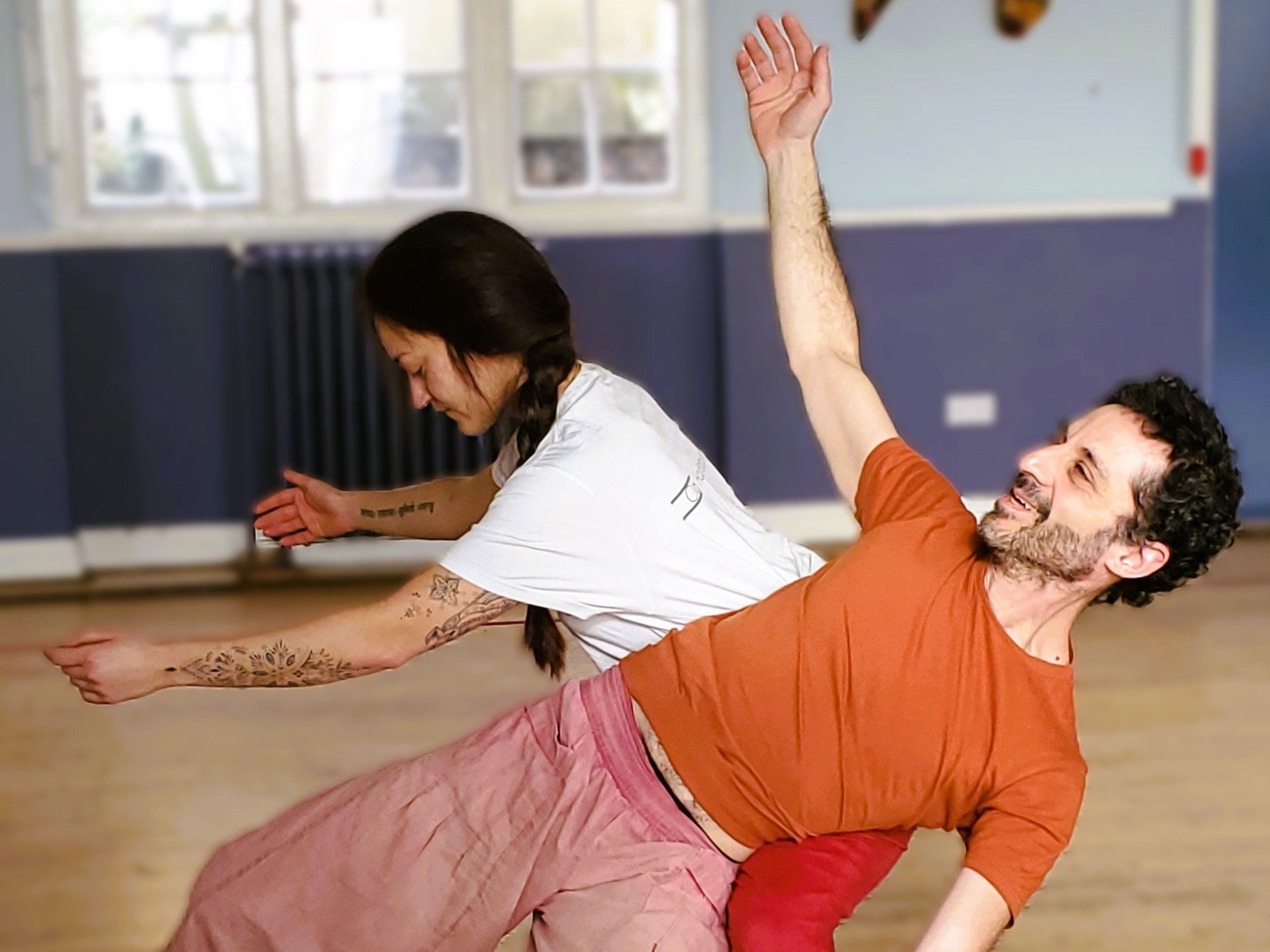
ASHER LEVIN
-
Ever-increasing years of experience - I started when I was 16. I'm now 51.
I studied Dance, Drama & Theatre Arts at the University of Birmingham. (B.A Hons 2.1 1994-1997) Including a modules in CI and Devised Theatre
I studied physical theatre at Ecole International du Theatre, Jacques Lecoq, Paris (diploma, 2000-2001)
I have participated in CI courses and workshops with some of the world-wide recognised leaders (e.g. – in no particular order - Nancy Stark-Smith, Martin Keogh, Ray Chung, Nita Little, Charlie Morrissey, Rick Nodine, Lolita Raja, Kathy Crick, Andrew Harwood, Gesine Daniels, Elske Seidel, Joerg Hassman, Vega Lukoenen, Robert Anderson, Eckhardt Muller, Ester Gal, Heike Pourian, Barbara Pfund, Jess Curtis, Stephanie Maher, Peter Pleyer, Benno Enderlein, Adrian Russi, Lee Bolton, Jamus Wood, Thomas Kampe, Markus Hoft, Laura Doehler, Richard Parker, Marie Chabert, Mark Rietema,... to name just some of the dozens of teachers and influential practitioners – and jamming partners in my journey – to all of whom I owe a debt of gratitude.
I have been teaching CI internationally since 2008, first teaching regular classes in Berlin for 7 years, (where I also ran K77 Studio for 5 years) and, during this period, intermittently in London and Bristol. In this time, I also taught at festivals including Bremen New Years CI retreat and Easter CI retreats (organised by Markus Hoft) over several years; Trans-contact, in Romania (2 years running); Pfingsten CI Festival in Potsdam over several years, Nordtanz in Hamburg (organised by Angela-Mara Florant). I performed (along with Eckhard Mueller, Daniela Schwartz, Alice Godfroy & Roland Nordeck) in a participatory lecture demonstration on CI and its history in Strasbourg, created and organised by Professor Alice Godfroy (now Professor of Dance in Nice University).
Since 2021, I've lead day and weekend intensives in the UK, in Devon, Cornwall, Bristol, London, Sheffield, Liverpool, Manchester, Edinburgh and Dundee, mostly teaching alone - often in collaboration with a local producer, as well as sometimes with other CI teachers (including Richard Parker, David Basak, Lee Bolton, Jocasta Crofts, Harriet Roberts and others). I lead a 6 month course (now in its third year), Basics to Beyond in which participants meet for a day or weekend each month.
Since 2021 I have taught at various festivals and events, including annually at Emerging Hearts CI festival and at Buddhafield Festival; I taught at Rumble in 2025; I've also taught CI twice at Ecstatic Experiences' retreat at Embercombe.
I have taught classes for students at Scottish School of Contemporary Dance, in Dundee.
I have led professional-level classes for Scottish Dance Theatre, during their rehearsal process.
My practice includes regularly labbing and researching with local colleagues and enthusiasts, as well as cross-media teaching collaborations and research, including with musicians - e.g., I've collaborated with cellist Bela Emerson, Simon Leach, and Collaborative Vocal Improviation practitioner, Briony Greenhill; with artists (working in response to works by Barbara Hepworth and researching with artist Sachin Babbar. And with body-work practitioners - I've led workshops with Emilia Gzyl that combine Partner Yoga, Thai Massage & CI. I'm currently working on a teaching project with Justin Philpott, combing a weekend of Thai Massage & Creative Movement Improvisation (including CI).
-
I identify my role as a facilitator over teacher. I’m facilitating participants in their own explorations of their own abilities, qualities, working with their own challenges and limitations – I am working to open possibilities, to enrich and deepen available movement vocabulary for each participant.
Safety is key, and I sensitively build both a sense of safe practice in the room and take care of the practical elements to make sure that safe practice is integral to the workshop, and I work to keep Jams safe too.
I am passionate about inclusivity. My philosophy is that CI is for everyone, no matter what limitations one may have (physically or psychologically). I always make a space at or near the start of a session for people to share anything they need to about themselves, to feel safe within the context of the session, as well as in advance of a workshop where possible (sharing about things beyond the everyday aches and pains that most of us need to manage). I adapt my teaching practice to the needs of each participant. I ask for support from assistants where necessary. I advise people clearly to stay well within their safe practice: while searching for ease in all we do, some effort is fine, however strain and pain – and injury - is not.
Central to all my CI teaching is the art of listening with the body, particularly to the point of contact with a partner or partners; everyone’s connection (dance) with, and channelling of weight to the earth; and, inside, to one’s own anatomy.
I incorporate teaching elements of verbal and conscious physical consent practice in some of my exercises - and address the limitations of verbal consent within CI. I encourage participants to tune in to their own sensitivities or boundaries (in real time), to be clear about their ‘yesses’ and to become empowered and free to act on a ‘no’ in a range of ways, from asking for a slight adaptation, to moving away, to asking for support, to verbally addressing an issue.
I encourage and facilitate solo improvisation as an integral element of Contact Improvisation, the latter cannot exist in a (wholesome) jam, without the former; Leaving a Contact dance need not be - often, dare I say, is better not - the end of the dance.
In facilitating explorations of certain types of movement and movement pathways I make clear that these are for training and, in the reality of a jam, a myriad of variations and co-created pathways is available to us. Within workshops, I set-up themed practice for types of movement to be explored organically.
I encourage creative play, tuning in to the interpersonal, focusing on what is mysteriously co-created and committing to the CI dance.
I have many, many, influences in my practice, over 35 years – wonderful, inspiring teachers and dance partners. (I listed some above). I also have been influenced by several hundred, if not some thousands of jams and the amazing ‘teachers’ who partnered me, many of whom I don’t know. I have been highly influenced by working with peers in labbing sessions and ‘dance dates’.
Workshops
-
We will explore the delicate art of balancing – on our feet, and on our sits-bones (or bums), both solo and with a partner. We will move from balancing ourselves without a partner (standing, standing on one leg, sitting), to moving from balance to off-balance, through to the cooperative practice of counter-balancing. We’ll explore both counter-balancing outwards (which is more unusual in CI, but can open up possibilities and awareness) through to counter balancing towards each other, and experience the transitions between both. We’ll work solo, in duets and trios.
There’s a wonderful threshold of suspension and potential energy release in that moment when off-balance or counter-balance becomes fall, travel or adaptation. This potential will be gently explored.
Beginners
-
I’m big into shaking as a practice, shaking out, loosening-up, a range of which I’ll guide us through for an hour, interspersed with moments of rest, release and relaxation:
Deer and other mammals, having survived a chase, will often go through a series of springs and shakes to work out the stress and surplus adrenaline. Shaking is a tool that can relax us, wake us up, loosen and lubricate our joints, prepare us for the day and – throughout the day – help us to process challenges or tension as they arise.
We will lying on the earth (or start standing if it feels more appropriate); We will shake lying down, using a rocking motion of our feet - the fulcrum being our heels against the earth. Standing, another moment of rest and near stillness in the Small Dance; we will shake from the knees – shaking the flesh from the bones; shaking through the feet, into jumps, like the Masai (straight up and down) or more varied (like deer); it will develop to 'throwing away' a foot, or a hand; moving back towards relaxation, we'll include elements of waving, rippling, flapping. We'll relax into gentle flowing 'lyrical' movement. Our last 'shaking' will be subtler: vibrating, shimmying, tingling – feeling the body’s default basic vibration as it whirrs with life. We'll end with standing stillness, maybe have a vocal share about it, and be on our way

SOLEDAD
DE LA HOZ
-
Soledad de la Hoz trained at the Rambert School of Ballet and Contemporary Dance.
She has performed extensively in opera and theatre productions (ROH, Royal Court Theatre, Glyndebourne, ENO) as well as immersive dance and screen productions, working with notable choreographers such as Aleta Collins, Anna Morrissey, Maxine Doyle, Marie-Gabrielle Rotie, Scarlett Mackmin, Jennifer White and Lisa Welham.
In addition to her professional dancing, Sole is a trained Thai massage therapist and has a deep love and interest in Contact
Improvisation has an immense positive benefit on her movement practice and well-being. She is very happy to continue developing in this field by training and teaching.
-
I love that it invites an immediate body presence and awareness through the connection to others. For my own practice, I find that it awakens pathways and new possibilities in my movement. I love the improvisation, creativity and playfulness side of it as well as the more physics exploration. What I love about teaching is sharing this passion with other people and offering what I find that has helped me in my journey. Also, I love watching people dance
I believe we all have the tools to dance contact and enjoy this form. Listening, awareness and play is inherent in all living beings. In classes we explore games to remember this. So rather than a teaching from scratch is helping to remember…
I aim to create spaces where we practice taking care of ourselves and each other as a group
Workshops
-
A workshop for dancers at any level. We'll cover some of the core principles of contact improvisation: listening through touch, exploring giving and receiving weight, following and leading, and finding flow in shared movement. A selection of fundamental skills that will help you in your dancing. Expect a balance of guided exercises and open dancing to help you feel grounded, connected, and ready to continue your contact journey!
Beginners
-
Connective tissue is the living matrix that supports, contains, and connects us from the inside out. Using this intricate web as the foundation for our dancing, we’ll explore how the fascial network can deepen our sense of structure, relationship, and movement, both within ourselves and in connection with others. We’ll play with ideas such as fascial hooking, swimming under the skin, and tensegrity as ways to stay present with the unknown, finding both safety and suspense as we enter dynamic lifts and shared momentum. Expect guided explorations into skin, connective tissue, and touch, and plenty of space to move, experiment, and dance.
Improvers
-
In this session, we shift the focus away from “doing” and toward listening.
It can sometimes feel like you need to perform or be skilled to take part in a dance. This exploration invites a different starting point: presence. The most essential thing you can bring to Contact Improvisation is your ability to listen, respond, and be in your body.
Together, we’ll explore:
Arriving into the dance through embodied presence
Letting go of the need to “do it right”
Listening to your own body and to others
Communicating through movement rather than thinking
Allowing the dance to emerge from shared attention
Rather than focusing on technique, we’ll be more interested in how we meet, how we sense, and how we move together.
From this place, skill develops naturally over time.
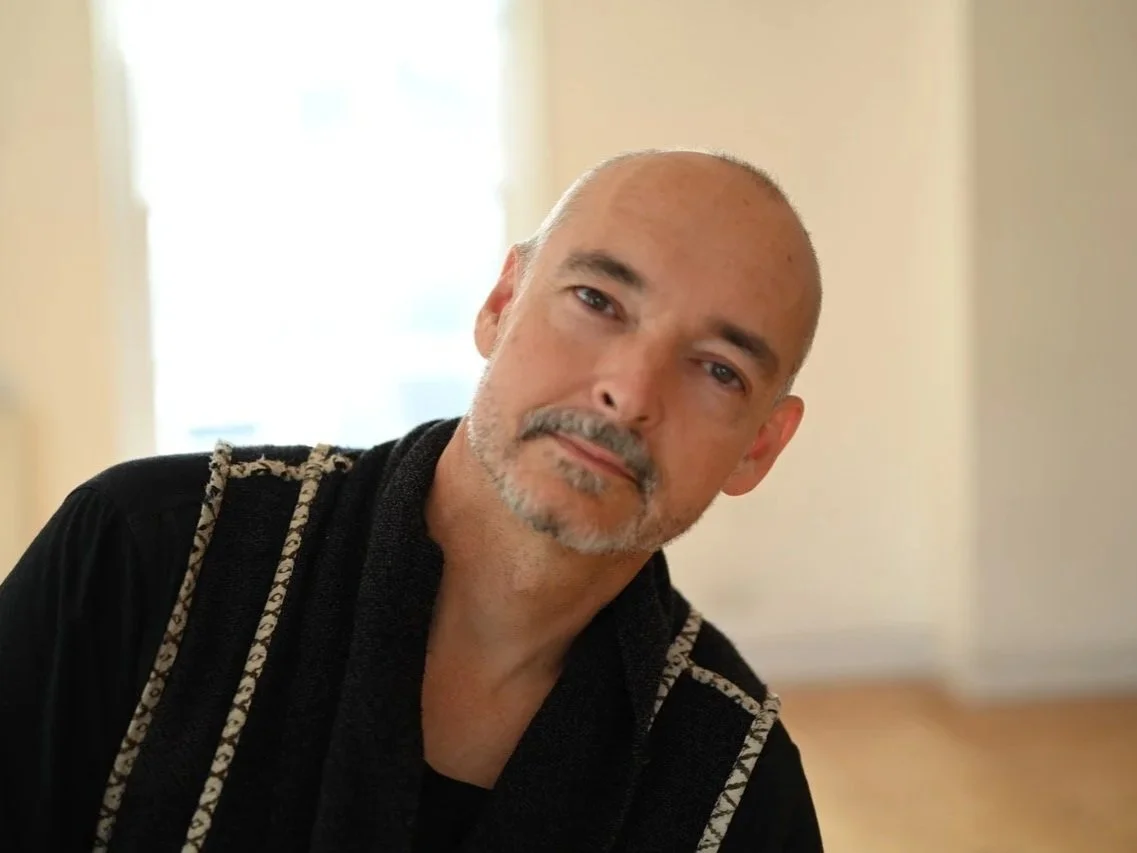
JAMUS WOOD
-
Jamus is curious about our unfolding as human beings, the embodied arts are excellent landscapes in which to play and explore. In fact, exploring is deeply rooted in his teaching and inquiry work. In recent years Jamus has focused on developmental evolution through dance and anatomy. Frequently returning to a softness that we had as babies, finding a deep sense of rest and relaxation, whilst allowing our senses to reach outward and inward, letting movement reveal itself so that we are moved as much as we move.
Jamus has been dancing since 1995, initially exploring contact improvisation, Body-Mind Centering® and The Feldenkrais Technique in later years he added to this mix an inquiry into moving out in wild places and tuning into the more than human conversations there. What does the land remember and how can we participate in these older, wider meetings? In 2000 he took two years away from the UK to study somatic dance practice in Outokumpu in Eastern Finland. It was a deep and rich time to submit to somatic practice, particularly Body Mind Centering and The Feldenkrais Technique. These days you will find Jamus out on the land as much as you will find him in a dance studio, yielding, resting, playing and relating to the land around him.
-
My interest is in kindling peoples curiosity and interest in there own evolution through contact improvisation. I want to ignite self led practice, so that participants find their own thread of interest and follow it.
My particular focus is in evoking embodied movement qualities and then applying this to contact improvisation. For myself this reveals a richer deeper conversation in there dancing.
I am a sight impaired dancer and I integrate, in both teaching and dancing relational qualities and principles from Touchdown Dance, a mixed ability dance company that provides spaces, opportunities and workshops for those with sight impairment and those who are sighted to come together too dance, speak and exchange.
Workshops
-
In this workshop we will take time to explore some of the territory at the edges of contact improvisation. Exploring aspects of the dance that often go unrecognised or don’t receive quality attention.
We will spend the first part of our time together dropping into inner and outer awareness through Body Mind Centering® exercises and perspectives. The intention is to bring a felt sense of embodiment and a deep listening to our dance.
In the second part we will draw inspiration from Shibari (Japanese Rope Play), there will be no ropes but we use our bodies in a similar way to rope. Through this play of physical limitation. We will play with qualities of resistance and surrender, being held and being free, stillness and breath, gravity and flow.
Experienced
-
In this open workshop orientated around those who are new to contact improvisation, we’ll slow down together and let the starfish body listen—its embodied qualities rising through us. We’ll take the time needed to drop into this primal, radial softness at the root of movement, sensing how listening draws us inward and how space invites us outward into connection.
From there, we’ll move into partner exercises and group scores. The aim is to linger in this quality long enough to taste real softness, connectivity, and center. Based on material from Body-Mind Centering.
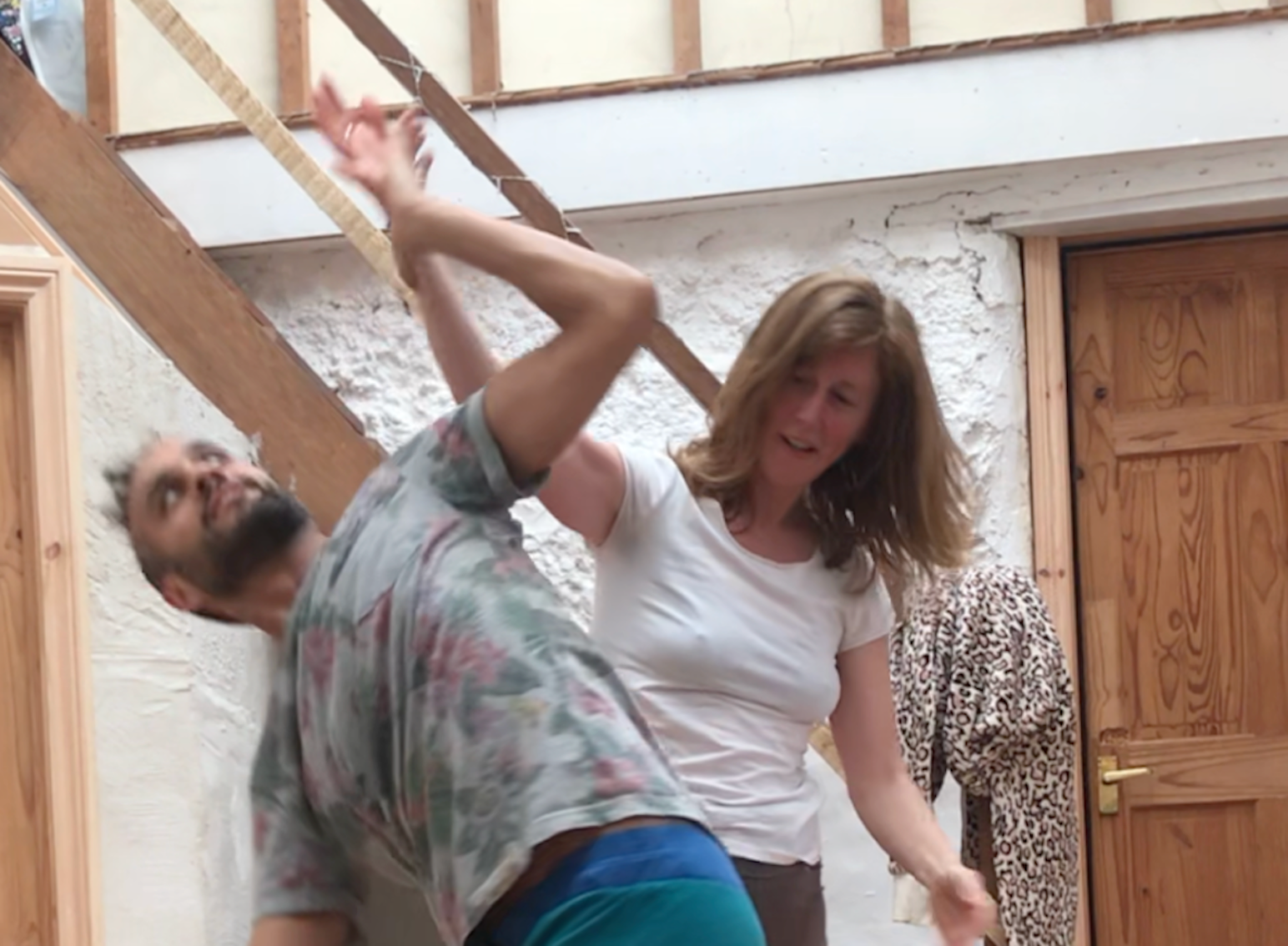
LEE BOLTON
-
I started dancing CI in 2009. My most focused training came through Joerg Hassman and Daniel Werner and their 6 month and advanced trainings in 2011(?). I have danced with many international established and respected teachers of CI over the years however I continue to learn most on the dance floor where the relational helps the improvisation unfold, where the technique gained finds life and spontaneity.
I've taught at Festivals (some - Buddhafields, Colourfest, Berlin InTouch, Touch&Play and Emerging Hearts!), Workshops and classes both in the UK, Europe and Australia. I co ran the Touch&Play festival UK in it's first 3 years.
-
In my humble opinion Contact Improvisation can be a profound Embodiment practice, though as with everything our disposition and approach determine the outcome.
I see there are many elements to the practice that balance it and bring the potential depth of embodiment. Technique and the relational make CI a dynamic and beautiful form, either one missing in my humble opinion the form looses something.
I love offering people the opportunity to explore their moving bodies. For someone who loves to move but comes from with a significant background of relational trauma I understand its not always easy to explore this form. For this reason I'm one of the first people to step outside the 'as a CI dancer be generous with your dance'. We can only be generous if we are open in what is happening. Sometimes witnessing is the most advanced practice, with no shame in doing so.
My biggest influence in my movement work is my spiritual practice and the 14 years of I have spent enquiring into life. And the 13 years of co teaching and exploring I had as part of Embodied Presence.
Workshops
-
This session could be curated to any level. The more beginner levels would simply be encouraged to explore the senses in movement. The more advanced levels will be encouraged to explore the senses but through multiple levels, being off balance and being more dimensional in their movements, shaping space.
All of us rely to a degree on one sense or another to orient ourselves in space and through life. In the jam space this can be both a pleasure and a limitation negating a wider sense we have when we drop into our bodies. Full body listening.
Here we will explore embodiment and listening, letting go, at times, of sight to support a wider sense of how we can listen to the space.
this session is curated by a sighted person who currently has use of all other senses, so there will unavoidably be bias’s towards this point of view. If you find you are oriented differently please come and speak to the facilitator to find ways of supporting your own exploration.
This session could trigger trauma around physical trust issues and sensory deprivation. If this is true for you please speak to the facilitator prior to the session to find out if this session is for you.
Improvers
-
(this is a clothed space)
Through the frame of touch we explore the low levels, we explore the substance and form of our embodiment, we play with the love and desire of our substance for touch and connection.
Pushing the edges of the CI frame we dive into the realms of touch, of bodies rolling over each other, and giving ourselves the time to simply enjoy how it is to touch and be touched, move and be moved. Feel ourselves as sovereign and be part of a whole.
The session will follow an unfolding held score.
-
Waking up and landing in your body ready to meet each other and a day of dancing.
Early morning waking up in your body, juicy and sweet. We will initially place some emphasis on gently led movement as a meditation. Articulating joints, feeling the ground, the space and to making connections through the body, feeling the meaty substance of your soma through guided invitations. Morning Practice
Opening this to improvised solo practice and then widening the frame to encourage grazing and 'lounging' with each other in rested moving space.
The session will begin in silence and unfold into a music supported (could be live music) space.
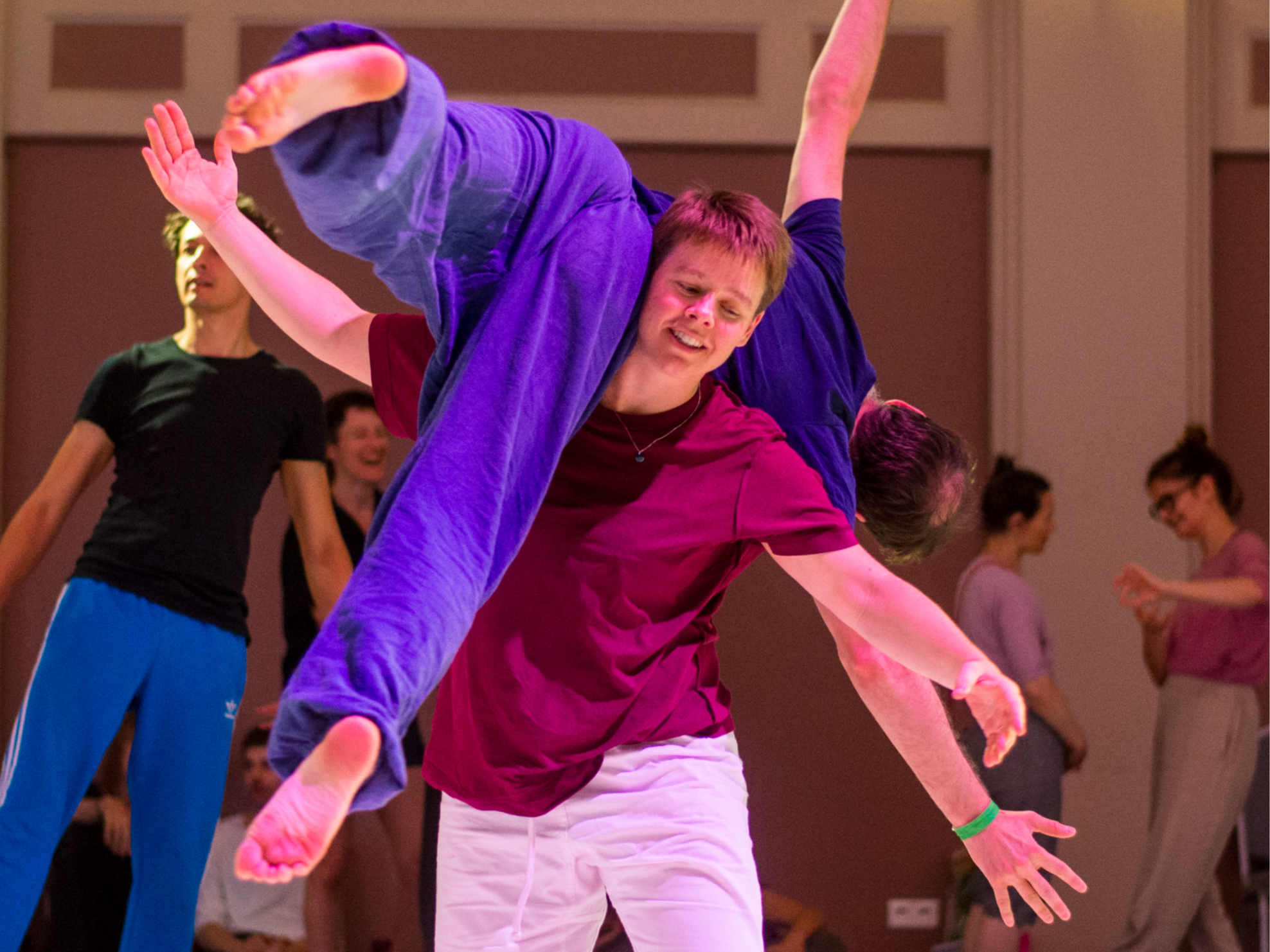
KLARA ŁUCZNIK
-
I’ve been dancing CI for over 13 years and teaching for more than 8, working with communities in Plymouth, Dartington (Totnes CI), Bristol, Warsaw, and at the Italy CI Camp. I teach at festivals, curate the Warsaw CI Flow, and this year co-hosted ECITE in Warsaw — a deeply inspiring experience. I also hold residential workshops and enjoy the performative edges of the practice.
My influences include Adam Benjamin (pedagogy and performance), Nancy Stark Smith (community), Nita Little (attentional training), and Andrew Wass & Nina Martin (ensemble work), alongside many teachers and communities around the world.
I’m also a dance researcher, recently completing a project on the felt sense of togetherness in CI duets.
-
CI as an embodied art practice. It has craft — embodied skills and attentive presence; enquiry — a willingness to enter the unknown; and expression — an authenticity we offer to partners and the world.
CI asks for bravery: it touches physical, emotional, and social edges. Friction is natural; we meet it with steadiness and dialogue. Clear frameworks help us self-regulate and support diverse needs without losing the essence of the form.
So I teach CI as an embodied, artistic practice rooted in care, curiosity, and shared responsibility. There is no single way to dance — we meet ourselves and each other as we are, caring for our bodies, our boundaries, and the spaces we create together.
Imperfect Practices embraces all of this: committed engagement, letting go of perfection, and trusting the ongoing research of dancing together.
Workshops
-
Trust in CI is an embodied skill. It is about orienting your senses in the ever-changing landscape of bodies and uneven ground, tolerating not knowing fully, and moving without clear reference. And it begins with falling—with ease.
In this workshop, we explore how to turn falling into new beginnings: spirals, rolls, body surfing, and more. We discover uneven ground as a partner we can rely on, and gravity as a constant guiding us to safety. We practice balancing structure with softness, regulating our bodies, and navigating disorientation with attentive awareness.
It is a crash course in falling—and once you know how to land, you can fly safely, get lost safely, take risks, and trust the dance to carry you into territories you’ve yet to imagine.
Beginners
-
How do we move as a group without losing our own thread? How can an ensemble stay open, attentive, and creative without collapsing into chaos or choreography? This lab explores group structures and scores as playful frameworks for dancing together.
We’ll work with classic ensemble scores (Passing Through, Tuning Scores and Ensemble Thinking structures), tuning our attention to space, timing, and the subtle ways we influence one another. The focus is on listening, noticing, and imagining possibilities — letting group intelligence emerge rather than forcing it.
Through guided experiments and short dances, we practice connecting across distance, shaping the space together, and finding ease inside complexity.
It’s an invitation to step beyond the duet, trust the group field, and enjoy the imperfect art of dancing as many.
Improvers

DAVID LEAHY
-
Referred to as the ‘dancing bass meister’, by Barre Philipps, David Leahy has dedicated the last 20 years to navigating the area between music and dance. Originally from New Zealand, David works as an improvising double bass player, contact-improvising dancer, composer, educator, and researcher. He is a prominent member of the London free improvised music scene and is a long-standing member of the London Improvisers Orchestra, as well as various other improvisation ensembles across Europe.
David's PhD, Musicians in Space (2020), explores what happens when the performance of free improvisation expands outwards into space, so as to remove the physical separation between the performer and the audience. David works as both a lecturer and dance musician in the dance faculty of Trinity Laban Conservatoire of Music and Dance, in London. For further information, please go to www.dafmusic.com.
-
The Underscore, devised by Nancy Stark Smith, is a framework CI that takes the dancer through many of the commonly occurring states of awareness that occur during a jam.
The Music-based Underscore is my translation of the practice for improvising musicians and I always look forward to facilitating a combined underscore where the two disciplines work through the practice together.
Workshops
-
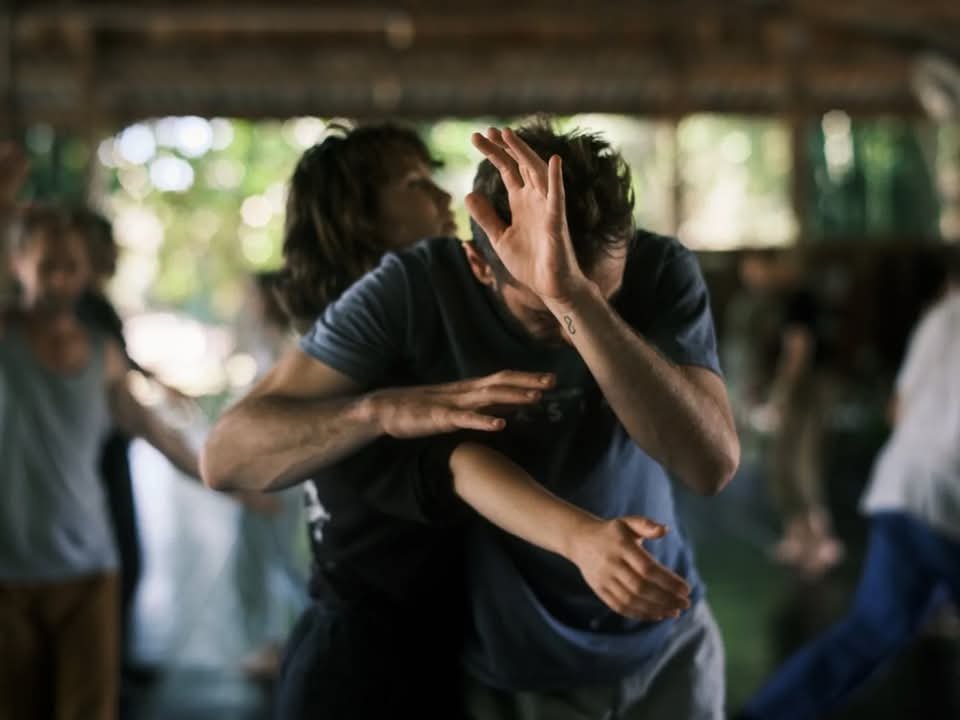
Tuesday-Sunday Morning
ALEXANDER DODGSON
-
I began practicing Contact Improvisation in 2022 and developed my foundations through long form immersive environments. My early learning came from multi week residencies with teachers including Nita Little, Kirsty Simson, Hugh Stainer, Zoe Solomons, Alessandro Rivelino, Aaron Brando, Itay Yatuv, Charlie Morrissey and many peers across the UK and Europe. These spaces grounded me in perception, shared attention, relational movement and the compositional nature of improvisation.
A major shift in my understanding came through a six week immersion with Ekaterina Basalaeva, a Russian choreographer and philosopher whose approach invited me to trust the intelligence of the body. Through her work with image, attention and sensation, I learned how movement organises itself when consciousness rests in the right place. This continues to guide the way I practice and teach.
I later completed a seven week full time teacher training with Angelika Doniy on Koh Phangan with thirty international teachers. This programme offered clear structure for introducing newcomers to improvisation and taught me how to adapt in real time. One of the strongest lessons was recognising when to let go of plans and meet the group as it is.
Alongside structured training, I have spent extensive time in long form jams, research spaces and compositional laboratories that deepen my sense of shared weight, timing, group organisation and embodied listening.
Over the past two years I have returned regularly to Towards in Chiang Dao where I have worked closely with Sasha Dodo and Dolores Dewhurst Marks. Their guidance has shaped my understanding of collective field awareness, perceptual depth and the quieter forms of intelligence that appear when dancers listen together. I feel grateful to call them peers and friends.
Eco somatic practice has become an important thread in my research. Working outdoors, using witnessing scores and allowing the landscape to shape attention has widened how I sense movement within a living environment.
TEACHING EXPERIENCE
I co organise the Manchester Contact Improvisation community where I facilitate weekly sessions and community jams. These gatherings focus on creating spaces that are welcoming for beginners while offering depth for experienced movers.
In the North of the UK I have taught mixed level weekend workshops that explore shared weight, centredness, attention and relational listening. I also help organise events for visiting teachers and collectives which supports the wider regional community.
Internationally I worked within the in depth CI programme at Shambala Festival in Thailand, a full time space that held groups of up to eighty participants. Many attendees were new to the form, and this experience taught me how to create clarity, safety and cohesion in a large mixed level setting.
I have also taught within the Soma Space at Buddhafields Festival and at Green Earth Awakening where embodiment, community and presence are already central values.
At this stage of my teaching life I am focused on refinement. I am learning to translate perceptual and relational insight into simple, grounded invitations and I am developing a deeper interest in real time composition and ensemble work that I plan to continue exploring in 2026.
-
My teaching begins with attention. I am interested in how we sense ourselves, how we sense others and how movement arises through relationship rather than intention. I teach from the felt sense of the body and use clear, grounded invitations. I also recognise that abstract ideas can support the learning process when they are rooted in lived sensation. Concept and experience strengthen each other.
A central principle in my approach is the common body, first articulated by Steve Paxton. I understand it as the shared field that appears when people meet through timing, rhythm, weight and awareness. When this shared field becomes clear, movement begins to organise itself beyond the individual. Much of my teaching supports dancers to recognise this collective intelligence and trust what emerges inside it.
I aim to create spaces that feel steady, warm and open enough for people to explore unfamiliar territory with safety and curiosity. Consent, clarity and groundedness form the foundation of my facilitation. I offer invitations rather than instructions and trust each body to find its own way.
Inclusivity is central to my work. I hold beginners with care and offer experienced dancers depth without hierarchy. I value the moments when perception sharpens, when bodies begin to organise together and when movement becomes something recognised rather than produced.
My influences include principle based improvisation, Katya’s work with embodied visualisation and the collective field awareness shaped through my time at Towards. These influences guide the subtler layers of my teaching such as tone, direction, weight and attention and continue to show me how intelligence grows when people listen together.
I understand teaching as shared inquiry. I am inside the practice with everyone else and learning through the same relational forces. My aim is to support people to become more perceptive, more available and more connected to what arises between us.
Workshops
-
This outdoor practice helps dancers arrive into the day through quiet attention and gentle movement. After a short introduction, duets begin back to back to sense tone and breath before entering the landscape to choose a place that feels alive. One duet moves while the paired duet witnesses, shifting roles when the movers instinctively orient toward the watchers. The oscillation encourages slowness, depth and connection with the environment, with touch optional throughout. A soft bell ends the practice, followed by a brief harvest.
-
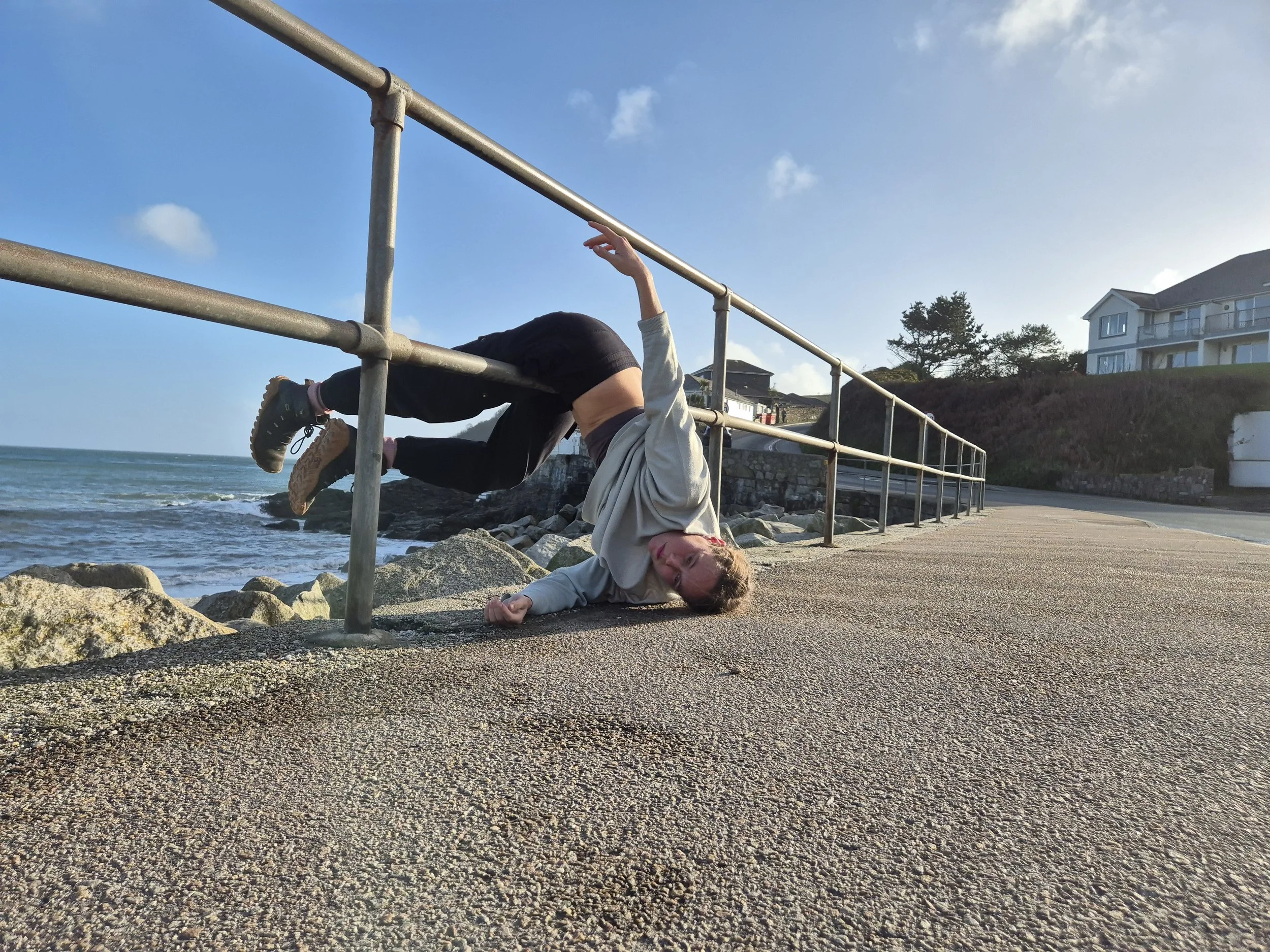
Tuesday-Sunday
SHALIKA WOLF
-
I discovered and began practicing CI 7 years ago. I have consistently been practicing CI weekly or more for over 2 years now. I have lead beginners classes at multiple festivals and local retreats over the last 2 years. Also I have been teaching and holding space for a weekly class and Jam in Cornwall for over a year.
I have not had any extended formal training, though I do commit to attending regular workshops held by experienced teachers throughout the year and attend any and all CI related events and festivals that I'm available for.
I feel deeply in love with this practice and privileged to be stepping into the roll of teacher as rapidly I embody the practice.
-
I teach and hold space for CI for it's magic to bring people deeper into them selves and each other, vulnerably, through creative and authentic expressive movement and human touch. For this practice and the space it's held in, to reach a high quality of authentic relating there is a need for safety. So I approach my teaching with the intention to remind people you can't get it wrong, this practice is authentic expressive movement, it just so happens that there are also some relational skills we can learn along the way to expand our capacity to express ourselves in fullness and fluidity.
My approach is to often separate/layer the class into 3 elements and then weave these elements together through explanation, demonstration and exercise exploration.
These 3 elements are; inward and mediative, outward and physical and authentic expression of movement. I always intend to keep the learning intention specific, clear and minimal with then multiple ways to explore the same leaning intention... so that participants come away feeling clear on what, how and why they learnt what they learnt.
I like to give space for a small jam within the score of the teachings after the exploration, followed by a short discussion of personal findings. Each exercise often building through 3 layers to offer tangible skill learning.
I have capacity to offer multiple ways of skill learning for all levels of ability and capacity on a physical level. I personally lost CI from my life for 2 years and deeply believed I could no longer practice this dance, physically or mentally; I have witnessed how fully moving through this experience has given me an extremely high capacity to embodying the practice and to teach CI to anyone but especially those feeling unworthy or confused of the practice.
Workshops
-
ASM is a guided relaxation process to support communication with our
superconsciousness, the consciousness that we are, that streams through our bodies.
This is a space to drop into the subtle sensory experience of the body and have a conversation with the consciousness that streams through it.
Through a process consisting of...
Relaxing our physical body (Regulated nervous system)
Quietening/slowing our mind ( Meditative theta brain wave)
Amplifying our heart resonance ( Gamma wave frequency)
to support
Deepening into the subtle sensations of the body so that the subtle becomes apparent.
The invitation is to allow movement of the body in response to the experience of sensation. To support a deepening sense of connection to the sensory experience of the body, leading to a higher capacity to communicate with the consciousness that streams through it.
As we continue to deepen into this observational experience of our bodies Small Dance there will be the opportunity to improvise with further communication and 'ask for more'. I will guide us to observe what it feels like to ask questions and receive and perceive the answers... through the body.
The intention is to spend an hour getting to know how your body, and the consciousness that you are communicate with each other.
I hold the space and guide the relaxation and communication tools, but this experience is uniquely guided By each individual, For each individual.
Participants will experience and express this workshop through a combination of passive and active meditation, meditative improvised movement, stillness and contemplation.
A personal intention will be expressed to self in some way to support the direction of the communication with self within the practice.